Facts checked 17 September 2026
We periodically re-check the facts on this page against confirmed sources. Things change fast in Japan: resorts, restaurants, runs and rental shops open, close and rename, so this is the date we last verified the claims here. This does not guarantee that every fact is accurate, but we make our best effort to keep them up to date, drawing on official sources such as the ski resort's own website.
Akakura: the historic onsen base for Myoko Kogen

Photo: Raita Futo, via Wikimedia Commons (CC BY 2.0) · Image credits
Akakura Onsen isn't a resort village built for skiers, it's a hot-spring town that happened to grow a ski area next to it. The onsen opened in 1816, and several of the inns built by its earliest residents are still trading under the same names two centuries on, making it the largest and oldest of the Myoko Kogen onsen towns, with ryokan, izakaya and public baths all within walking distance of the lifts. The skiing has the same old-school character. Akakura Onsen itself has run since 1937, one of Japan's oldest ski areas, and is directly course-connected to its neighbour Akakura Kanko on a joint lift ticket. A short shuttle or drive away sit three more Myoko Kogen resorts: Ikenotaira, Seki Onsen and Suginohara, home to one of the longest ski runs in the country. None of it is polished, and none of it is crowded.
Major ski areas within range of Akakura5
One of the original Myoko Kogen resorts, an onsen town resort with steep upper terrain and a mellow lower mountain. No guide yet.
One of Japan's first European-style ski hotels, built in 1937, with a ski-through link to neighbouring Akakura Onsen. Read the guide
A Myoko resort with one of Japan's longest groomed runs, around 8.5km from top to bottom. Read the guide
A small Myoko-area resort with a hot spring at the base. No guide yet.
No guide yet.
Plan a trip
- Get there
- Hokuriku Shinkansen Tokyo to Joetsu-Myoko, about 1h50, then the Myoko Kogen Liner shuttle bus or local rail plus taxi. Or about 3.5–4 hours' drive from Tokyo.
- Then
- Akakura town itself is walkable end to end; a car or the timetabled shuttle is what gets you out to Ikenotaira, Seki Onsen and Suginohara.
- Stay
- A ryokan or onsen hotel right in Akakura Onsen, a genuine walk-to-the-lifts base rather than a car-park resort village.
- Combine
- Akakura Onsen and Akakura Kanko on one joint ticket; Ikenotaira, Seki Onsen and Suginohara on the wider Snow Chaser multi-resort pass.
- Time
- Three or four days covers the cluster without skiing the same resort twice.
What an Akakura base buys you
Akakura is not one lift-linked mountain the way Niseko United is, and it doesn't pretend to be. What a stay here actually buys you comes in two tiers. Right in town, Akakura Onsen and Akakura Kanko are directly course-connected with a combined lift ticket, so those two are a genuine walk-on, ski-between-them pair. Everything else (Ikenotaira, Seki Onsen and Suginohara) are separate, unconnected ski areas a short shuttle or drive apart, tied together instead by the Snow Chaser Lift Pass, a multi-resort ticket covering all five areas. It's closer to Hakuba's model than Niseko's: a handful of independent mountains you choose between each morning, just far smaller and quieter than either.
The resorts within reach
Akakura Onsen is Myoko's largest ski area, 14 lifts across three sectors (Yodel, Kumado and Ginrei), with the steepest run in central Japan and a longest run of 4,500m from a 1,500m top station. It's also the only Myoko resort with night skiing, running most of the season. Next door, Akakura Kanko is a real resort in its own right (7 lifts, 10 runs and around 760m of vertical, terrain split roughly evenly between beginner, advanced and expert) directly linked to Akakura Onsen by both piste and lift ticket. Ikenotaira, a short hop away, has its own hot spring at the base, around 740m of vertical and 5–6 lifts; the groomed runs are mostly beginner and intermediate, but there's roughly 900m of earn-your-turns backcountry above the resort for anyone who wants it, plus plenty of tree skiing inside the boundary. Seki Onsen is genuinely tiny (a double chair and a single chair, 310m of vertical, four courses) but it takes some of the heaviest snowfall in an already snowy region, around 14.5–16m a season, and the draw is the ungroomed terrain and steep tree skiing rather than piste count. Suginohara is the outlier: 1,124m of vertical, one of the biggest single-resort drops in Japan, reached by a gondola that takes around 18 minutes to the 1,500m summit, and a longest run of roughly 8.5km, frequently cited as the longest in the country. Despite the huge vertical it's mostly beginner and intermediate-pitched: a cruiser mountain built around distance, not steepness.
Live prices and availability from Booking.com, Airbnb, Expedia and others, via Stay22. We earn a commission on bookings made through the map, at no extra cost to you; it has no bearing on what is written above.
Getting there and getting around
The nearest Shinkansen stop is Joetsu-Myoko on the Hokuriku line, about 1h50 from Tokyo, not Myoko-Kogen Station, a different, local-rail-only stop it's easy to confuse it with. From Joetsu-Myoko, the "Myoko Kogen Liner" shuttle bus runs direct to Akakura Onsen, Akakura Kanko and Suginohara in 30–45 minutes, though there are only around two round trips a day, so it only suits an arrival that lines up with the timetable. The alternative is the local Echigo Tokimeki Railway on to Myoko-Kogen Station, roughly hourly, followed by a short taxi or local bus. Driving from Tokyo is about 285km and 3.5–4 hours via the Kan-etsu, Nagano and Joshin'etsu Expressways; winter tyres are assumed either way. Once you're here, Akakura town itself is compact enough to walk, but a car or the shuttle timetable is what gets you out to Ikenotaira, Seki Onsen and Suginohara, none of which are lift-linked to town.
Where to stay
Lodging in Akakura is ryokan-led and genuinely walkable: rooms, izakaya and public baths within a short walk of the Akakura Onsen and Akakura Kanko lifts, not a purpose-built resort village bussed in around a car park. It runs from budget ryokan from roughly ¥8,000 per person a night up to more established houses from around ¥16,000 per person, though treat those as a rough band rather than a rate card; a few of the original nineteenth-century inns, including Akakura Hotel and Toma Ryokan, are still trading under their founding names. Ikenotaira has its own onsen at the base if a quieter, resort-adjacent stay appeals more than the town itself.
Who this doesn't suit
If you want one lift-linked mountain rather than a handful of separate ones tied together by a shared pass, Akakura's set-up will feel more like admin than convenience: that's Niseko United's job, not this one. And if a walk-on gondola and groomed cruisers matter more than deep, old-school snow and a quiet lift line, Suginohara aside, most of this cluster is built for a different kind of skier. Akakura suits a trip built around a genuine onsen-town base, old Japanese ski culture and terrain that hasn't been smoothed over for volume.
Need to know
- Getting there
- Hokuriku Shinkansen Tokyo to Joetsu-Myoko (about 1h50), then the Myoko Kogen Liner shuttle or local rail plus taxi. Or a 3.5–4 hour drive from Tokyo.
- Getting around
- Akakura town is walkable; a car or the shuttle timetable for Ikenotaira, Seki Onsen and Suginohara, none lift-linked to town.
- In range
- Akakura Onsen and Akakura Kanko (linked, joint ticket), plus Ikenotaira, Seki Onsen and Suginohara: five resorts in total.
- Lift passes
- A combined ticket covers Akakura Onsen and Akakura Kanko. The Snow Chaser Lift Pass covers all five resorts in the cluster on one ticket.
- Where to stay
- Ryokan and onsen hotels in Akakura town, walking distance from the Akakura Onsen and Akakura Kanko lifts; Ikenotaira for a quieter, resort-adjacent onsen stay.
- Best for
- An old-school onsen-town base with deep, uncrowded Myoko Kogen skiing, rather than one big lift-linked mountain.
Check each resort's official site for current lift, pass and opening information.
No Akakura news items yet.
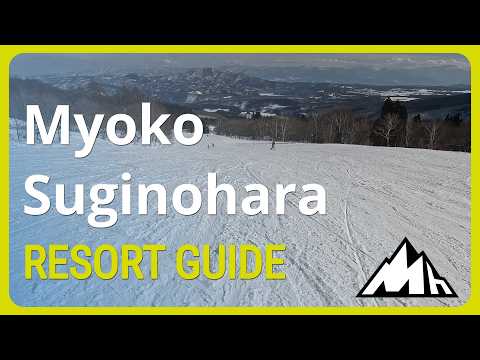
Myoko Suginohara: long, wide, quiet groomers
A guide to Suginohara in the Myoko area of Niigata, home to one of Japan's longest runs and rarely a lift queue.
No videos yet for Akakura Onsen, Akakura Kanko, Ikenotaira or Seki Onsen specifically.