Facts checked 10 September 2026
We periodically re-check the facts on this page against confirmed sources. Things change fast in Japan: resorts, restaurants, runs and rental shops open, close and rename, so this is the date we last verified the claims here. This does not guarantee that every fact is accurate, but we make our best effort to keep them up to date, drawing on official sources such as the ski resort's own website.
Morioka: a city base for a Tohoku ski road trip

Photo: 掬茶, via Wikimedia Commons (CC BY-SA 4.0) · Image credits
Morioka works as a ski base because of the city as much as the mountains. The capital of Iwate is a proper city, with a Shinkansen station, more izakaya than you can work through in a month, onsen, and business hotels that cost a fifth of an in-resort room, some of which let you cancel on the morning of check-in. Ringed around it, 30 to 70 minutes away, is a set of small, quiet ski areas. Apart from Appi Kogen, none are large enough for a week, but as a cluster of resorts they are well worth a visit.
Major ski areas within range of Morioka7
One of Japan's largest resorts and its first for black-run terrain, with cat-accessed tree runs. Read the guide
One of the snowiest resorts anywhere, 18m+ in a good year, with twelve ability-graded in-bounds tree zones. Read the guide
An Iwate resort that has hosted World Cup alpine races, with a long top-to-bottom run. Read the guide
A resort in the Hachimantai area of Iwate, part of a cluster of small ski areas around the plateau. Read the guide
A compact, skier-dominated ski area near Morioka with mellow, easy-access tree skiing and cheap tickets. Read the guide
A resort in the hills above Morioka, a quick and convenient day trip from the city. No guide yet.
A resort above Lake Tazawa in Akita, Japan's deepest lake, with views over the water from the slopes. No guide yet.
Other reachable ski areas6
The maths is simple. A big-name resort means crowds, high prices and the good snow gone by eleven. These ski areas have two or three slow chairs, a short list of pistes, and marked tree runs that almost nobody else is skiing. The kind of powder day you might get lucky with once on a week in Niseko is just a normal Tuesday here after a decent storm.
Plan a trip
- Get there
- Shinkansen Tokyo to Morioka in 2h12, or drive up from Tokyo or Narita in about six and a half hours.
- Then
- You need a car. Hire it at Morioka station, or drive the whole way and break the trip on the way up.
- Stay
- A business hotel near Morioka station. Book multi-night stays as single nights so you can change plans with the weather.
- Time
- Ten days to a fortnight. A week works, but the point is the rotation and you want the room to chase storms.
- Passes
- Bought per resort, roughly ¥4,500 to ¥6,000 a day. Geto is on the Indy Pass, and other Tohoku resorts have been in recent seasons; check the current list.
The case for a city base, and the catch
Staying in Morioka rather than at a resort buys you a bigger, newer, cheaper room, a real choice of places to eat and drink, and the freedom to wake up, look at the radar and decide where to ski. When rain is coming, you drive away from it. When a ski area gets buried, you go there. You cannot do any of that from a room you booked and paid for in a resort six months ago.
The catch is the driving and the planning. First lifts mean a 30 to 90 minute drive each way, and someone has to decide the night before where you are going. The driving itself is less frightening than people expect: the roads out here are nearly empty, the car parks are vast and usually free, and nobody in the world clears snow faster than Japan. On all-wheel drive and winter tyres, packed snow holds well if you slow down. A storm-day whiteout is the one real hazard, and the fix is to not drive into one. If winter driving is new to you, do your first day as a car hired at the station for a run up to Iwate Kogen, and build from there. Book the rental months ahead: cancellation is usually free, but the good vehicles sell out and the price only climbs. A "seven-seat" SUV holds four adults with gear, no more.
Live prices and availability from Booking.com, Airbnb, Expedia and others, via Stay22. We earn a commission on bookings made through the map, at no extra cost to you; it has no bearing on what is written above.
The drive up, and where to break it
Driving up from Narita, with a night's stop on the way, is a good alternative to the train. The Shinkansen is quick but expensive, and the JR East Tohoku pass now runs for five consecutive days rather than any five in a longer window, so on a two-week trip you are buying two of them or two sets of tickets, and you still need a car at the other end.
Breaking the drive also buys you a half-day of skiing. Minowa, in Fukushima just off the E4 expressway, is the obvious place to stop: small, cheap, quiet even on a holiday weekend, and full of trees. The pistes are limited but the main run is wide and steep enough for a warm-up and a gear check. There is a Route-Inn just off the expressway 30 minutes away; from Minowa it is under four hours on to Morioka.
A week's rotation, nearest first
Iwate Kogen (30 minutes) is the closest and the one to run to after a big overnight fall. Six chairs, a gondola that actually reaches the top, ten pisted courses, a cafeteria, not much English, and trees you can read from the lift with nobody minding if you drop into them. An adult day pass is about ¥5,500. The drive is straightforward, only the last five minutes on a mountain road and no hairpins.
Amihari Onsen is five minutes further on: a small, skier-heavy ski area with gentle trees right off the lift, no queues, cheap tickets and an onsen hotel at the base. It gets better as a powder day goes on, because the locals go home. It has its own guide here.
Shizukuishi (35 minutes) is a Prince Hotel resort, which means one big slopeside block with the rentals, the onsen, the convenience store and the ticket window all in it, and no town or nightlife at all. The lifts are ageing and the gondola stops short of the summit, so getting up top takes three of them. The trees are officially off limits, in practice fine if you are discreet, and the snow is as dry and light as anywhere in the region. It rarely fills up, so the lines you find first thing are still there after lunch, and the groomed blacks are worth an early lap before you go looking. The pre-booked cat skiing on the second peak is booked out months out and only puts you on a disused piste, not in the trees.
Hachimantai (45 minutes) is a short bus ride between two ski areas. Panorama is a beginners' and low-intermediate mountain. Shimokura is the reason to go: a near-empty ski area, no gondola, three exposed chairs with odd gaps between them, and wide, varied marked tree runs with no competition for them. Cruise and Edge are mellow and full of little natural features; Drop is steeper than it looks and turns nasty once it is chopped; the Fun run is the one to learn the trees on. If you are not going into the trees, there is no reason to make the drive.
The bigger ones, worth an overnight
Appi Kogen (45 minutes, motorway most of the way) is the biggest resort in the area, with its own marked tree runs and, since 2025/26, a place on the Ikon Pass. It is worth a night rather than a day trip, and it has its own guide here. Geto Kogen (about an hour) is one of the snowiest resorts in the country, a single modern base building and twelve ability-graded tree zones, covered in its guide here. Tazawako (1h10, over the line in Akita) has wide, steep, immaculate groomers, a designated tree run, easy off-piste and stupendous snow, plus views over Lake Tazawa. The drive is the problem: real mountain road with steep grades and exposed bridges, and in a storm you will pass hire cars in the ditch. Only go if you are a confident snow driver.
Morioka itself
Morioka landed second on the New York Times' list of places to go in 2023, and it earns a couple of evenings of your trip in its own right. It is walkable, and the part you want is between the station and the castle, where the hotels are: izakaya, very good sushi at a fraction of Tokyo prices, onsen, karaoke. Most small places have no English menu, and staff rarely speak much English either, so a translation app on your phone earns its keep here more than almost anywhere else in Japan. A very small number of places would rather not deal with a large foreign group at all, but that is rare, and most restaurants will find a way to muddle through the order rather than turn you away. The Aeon Mall by the station covers anything you forgot to pack.
Who should not do this
If you are a beginner, travelling with small children, or you want to click in outside your hotel door and not think about logistics, stay in a resort. Appi or a Niseko hotel will serve you far better. The Morioka trip is for people who can already ski a tree line, are happy to drive in winter, and would rather spend the money and the effort on variety and empty snow than on convenience. If that is you, this is about the best two weeks you can have on snow in Japan.
Need to know
- Getting there
- Shinkansen from Tokyo, 2h12; or fly to Hanamaki, though winter flights are unreliable. A car is essential once you arrive.
- Driving
- Quiet roads, free parking, all-wheel drive and winter tyres a must. Storm whiteouts are the main hazard; the Tazawako road is the one to be wary of.
- In range
- Iwate Kogen, Amihari and Shizukuishi (30 to 35 min); Hachimantai Shimokura and Panorama (45 min); Appi Kogen (45 min); Geto Kogen (1h); Tazawako (1h10).
- Lift passes
- Per resort, roughly ¥4,500 to ¥6,000 a day. Geto is on the Indy Pass; check the current roster for the others. Appi is on the Ikon Pass.
- Where to stay
- Business hotels near Morioka station from around ¥5,000, most with free same-day cancellation.
- Best for
- Confident skiers and riders after tree powder without the crowds. Not for beginners, young families, or anyone who wants ski-in ski-out.
Check each resort's official site for current lift, pass and opening information.
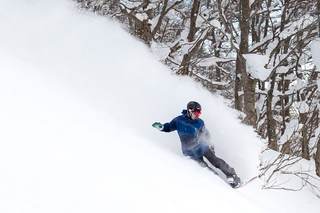
Appi Kogen's 20% off packages close September 30
Book a hotel-and-lift-pass package for this winter by September 30 and the rate drops 20% at either the ANA Crowne Plaza or the InterContinental, with a daily lift voucher and breakfast included. Stays run December 19 to March 22; full payment is taken upfront and is not refundable.
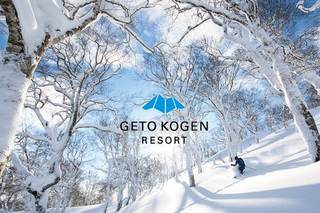
Geto Kogen will sell you a season pass for ¥1,900, if you happen to be 19
Turn 19 this season and a Geto Kogen season pass costs ¥1,900, against ¥96,000 for everyone else. For the rest of us, the real news is the Super Early Bird window: ¥70,000 for an adult pass if bought between September 1 and November 3, before it steps up to ¥84,000 and then full price in mid-December.
No Morioka videos yet.