Facts checked 18 September 2026
We periodically re-check the facts on this page against confirmed sources. Things change fast in Japan: resorts, restaurants, runs and rental shops open, close and rename, so this is the date we last verified the claims here. This does not guarantee that every fact is accurate, but we make our best effort to keep them up to date, drawing on official sources such as the ski resort's own website.
Furano: central Hokkaido's calmer alternative to Niseko

Photo: wakimasa, via Wikimedia Commons (public domain) · Image credits
Furano sits inland in central Hokkaido, a couple of hours from Niseko by road and a different kind of resort altogether. It runs as two connected zones, Kitanomine and Furano, joined by a mountaintop trail and covered by one lift pass. Where Niseko has become an international resort town, Furano is still mostly a working Hokkaido town with a ski area attached to it, and that shows up in the crowds, the queues and the price of a room.
It has a genuine competitive pedigree: Furano held its first FIS Alpine World Cup race in 1977 and hosted men's and women's World Cup events on and off through the 1980s, including a downhill double in 1986 and 1987. It isn't an active World Cup venue any more, it doesn't appear on the current Alpine World Cup calendar, but the racecourses built for those events are still part of the terrain today.
Plan a trip
- Get there
- Asahikawa Airport is the nearest, about an hour by car. New Chitose and Sapporo are both over two hours. JR Furano Station connects towards Asahikawa, with a short local shuttle on to the lifts.
- Base
- The Kitanomine Zone base, the Furano Zone base, or Furano town itself, a proper town rather than a purpose-built resort base.
- Combine
- One pass covers both zones. Tomamu is roughly an hour away for a day out or an add-on stay.
- Time
- Two to four days on the mountain itself, more if you use Furano as a base for Tomamu, Kamui Ski Links or Asahidake too.
- Pass
- Around ¥8,000 for an adult day pass in regular season. On the Ikon Pass.
The two zones
Kitanomine is the older, racier side: a 3km, six-person gondola up, with a high-speed quad and single chairs serving the old downhill courses, plus night skiing to around 8pm through most of the season. The ski-in/ski-out New Furano Prince Hotel sits right at its base. Furano Zone, reached by a 2.3km cable car, runs a longer season into early May and is the gentler, more cruiser-focused half of the mountain, with the Furano Prince Hotel and Ningle Terrace nearby.
Between the two zones there are around 23 marked runs on the resort's own zone-by-zone count (some counts are higher, so treat the exact number as approximate), split roughly 40% beginner, 40% intermediate and 20% advanced. The vertical drop is 839m on Prince Hotels' own figures. Some other sources give 964m, probably measured to a different point on the summit.
For stronger skiers, the draw is the off-piste and easy-access side-country around both zones, plus tree runs. Furano has historically kept its backcountry gates more tightly controlled than Niseko, though enforcement has reportedly eased in recent seasons; regulars rate the terrain through what's known locally as Gate 5. It isn't a mountain built around that terrain the way Niseko is, but it's there for anyone who goes looking.
Snow
Furano's inland position is the whole story here. It sits away from the coast, so it takes noticeably less total snowfall than Niseko, roughly 8 to 9 metres a season against something closer to double that at Niseko, though seasonal totals vary enough by source that this should be read as an approximate range rather than an exact figure. What that inland position buys back is dryness: Furano's snow is often described as among the lightest and driest in Hokkaido, a genuine trade-off rather than simply "less snow."
Getting there
Asahikawa, not New Chitose, is the airport to fly into: about an hour by car to Furano, against roughly two hours ten minutes from New Chitose or from Sapporo. Asahikawa city itself is about an hour twenty by car, or ninety minutes by bus.
The real differentiator is the train. JR Furano Station sits on the JR Furano Line towards Asahikawa, and a short local shuttle, around 10 to 15 minutes, connects the station to the Kitanomine and Furano Zone bases. That makes Furano genuinely rail-accessible in a way most of the Niseko area isn't, useful if you'd rather not drive on Hokkaido winter roads.
Where to stay
Lodging splits into three pools: the two Prince hotels at the Kitanomine and Furano Zone bases, condo-hotels a short walk from the Kitanomine lifts, and downtown Furano itself. As a rough guide, general area hotels run from roughly $50 to $90 a night and budget ryokan from around $40, while lift-adjacent Kitanomine condo-hotels run closer to $200 or more a night. Staying in town rather than at the base is a genuine option here in a way it isn't at most purpose-built Hokkaido resorts.
Ningle Terrace
Near the Furano Zone base is Ningle Terrace, a small forest craft village of around fifteen log cabins linked by boardwalks, each housing an independent artisan shop: candle makers, a washi-paper studio, a leather workshop among them. It's free to walk through, you only pay for what you buy, and it's best after dark, when fairy lights through the trees make it one of the more distinctive things to do off the slopes anywhere in Hokkaido.
Days out
Furano works well as a base for more than one mountain. Tomamu is around 40km and roughly an hour to an hour and ten by car, with a direct once-daily bus between the two resorts. Kamui Ski Links, near Asahikawa, is a closer 45 to 55 minutes, an easy half-day add-on. Asahidake, on Hokkaido's highest peak, is further out at around an hour to an hour and a half, ropeway-accessed backcountry rather than a groomed resort, and suits a dedicated day rather than a quick add-on.
Live prices and availability from Booking.com, Airbnb, Expedia and others, via Stay22. We earn a commission on bookings made through the map, at no extra cost to you; it has no bearing on what is written above.
Need to know
- Lift pass
- Around ¥8,000 adult day pass in regular season (roughly 6 Dec to 22 Mar), ¥6,500 in early/spring season. On the Ikon Pass.
- Getting there
- Asahikawa Airport, about an hour by car, is the nearest. JR Furano Station plus a short local shuttle is a genuine train option.
- Zones
- Kitanomine (gondola, racecourses, night skiing) and Furano Zone (cable car, longer season, Ningle Terrace), one pass for both.
- Night skiing
- Kitanomine Zone, to around 8pm, roughly mid-December to late March.
- Combine with
- Tomamu (about an hour), Kamui Ski Links (45 to 55 minutes), Asahidake (an hour to an hour and a half).
Check the official Furano Prince Hotels site for current lift, pass and opening information.
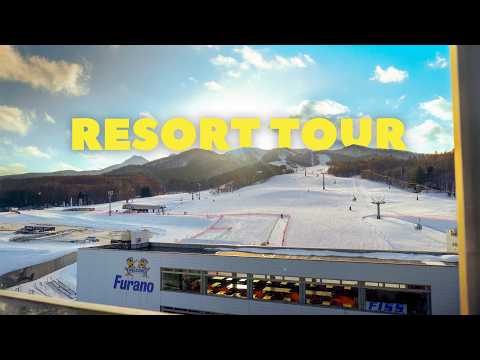
A complete guide to Furano: trails, tips and POV runs
A longer Furano guide covering the trail map, practical tips and point-of-view runs down the mountain.
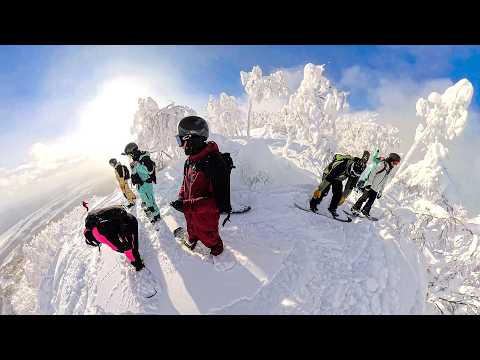
FURANO JAPAN: Snowboarding with my Best Friends
A snowboarding trip through Furano's two zones with a group of friends over a multi-day stay.
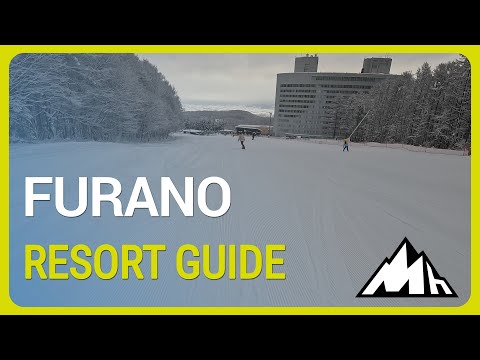
Furano resort guide
An overview of Furano in central Hokkaido: the two zones, the lifts, the snow and the town.