Facts checked 17 September 2026
We periodically re-check the facts on this page against confirmed sources. Things change fast in Japan: resorts, restaurants, runs and rental shops open, close and rename, so this is the date we last verified the claims here. This does not guarantee that every fact is accurate, but we make our best effort to keep them up to date, drawing on official sources such as the ski resort's own website.
Yamanouchi: the onsen base for Shiga Kogen and the snow monkeys

Photo: Yiannis Theologos Michellis, via Wikimedia Commons (CC0 1.0) · Image credits
Yamanouchi is not a ski resort. It is an onsen town in the hills below Shiga Kogen, Japan's largest linked ski network, with two more resorts of its own inside the town boundary and a genuine non-skiing draw a short bus ride away: wild snow monkeys bathing in a hot-spring pool at Jigokudani. Shibu and Yudanaka, the town's two onsen quarters, put you at the foot of Shiga Kogen's eighteen interconnected ski areas on one pass, with Okushiga Kogen and Ryuoo Ski Park a short drive further on and Nozawa Onsen within range of a day trip: even though its own front door faces a different railway line entirely.
Major ski areas within range of Yamanouchi6
18 linked ski areas in Nagano across two lift-connected clusters joined by one shuttle route. Read the guide
One of Japan's oldest and largest resorts, built into a traditional onsen town with free public bathhouses throughout. Read the guide
A Nagano local's favourite, built around a 166-person ropeway that opens a big north-facing tree run zone. Read the guide
No guide yet.
No guide yet.
A small, natural-snow resort near the Nagano/Gunma border, with a laid-back, backcountry-adjacent feel. No guide yet.
Plan a trip
- Get there
- Shinkansen Tokyo to Nagano (about 90 minutes), then the Nagaden Nagano Line local or limited express on to Yudanaka Station, or a direct bus from Nagano Station.
- Then
- Local buses run from Yudanaka up to Jigokudani and Shiga Kogen roughly hourly; a car helps for Nozawa Onsen, which sits on a separate railway line via Iiyama.
- Stay
- Shibu Onsen for the traditional ryokan and bathhouse circuit; Yudanaka, larger and more modern, for easier access to the station and buses.
- Combine
- Shiga Kogen's eighteen linked areas, Ryuoo Ski Park, X-JAM Takaifuji and Yamaboku Wild Snow Park nearby, plus Nozawa Onsen a drive or a rail change away.
- Time
- A week covers Shiga Kogen properly with a day spared for the snow monkeys and a side trip to Nozawa.
Eighteen ski areas, one hot-spring town below them
Shiga Kogen is Japan's largest linked ski network: eighteen separately built ski areas across the mountains east of Yamanouchi, all on one all-area pass, more terrain than anywhere else in the country. Yamanouchi itself is not slopeside (the town's two onsen quarters, Shibu and Yudanaka, sit down in the valley, with a bus or a drive needed up to the lifts) but it is the base with the most character of anywhere in range: centuries-old ryokan, a nine-bathhouse pilgrimage circuit worth doing in yukata and geta at Shibu Onsen, and streets that feel like a ski trip built around a hot-spring town rather than the other way round.
The town's other genuine differentiator has nothing to do with skiing. At Jigokudani Monkey Park, roughly a 30-minute walk from the car park through the Yokoyu River valley, wild Japanese macaques bathe in a natural hot-spring pool through the winter: a rest-day activity, or a reason to bring a mixed group who wouldn't otherwise choose a ski trip. Yamanouchi also hosted three events at the 1998 Nagano Winter Olympics, halfpipe snowboarding and Alpine technical disciplines, on the Shiga Kogen slopes within the town.
The resorts within reach
Shiga Kogen's eighteen areas span a huge range of terrain on the single pass, but two are worth knowing by name from a Yamanouchi base. Okushiga Kogen, the network's high northern tip near 2,000m, keeps dry snow into spring and has one of the longest seasons in Japan; the full guide is here. Yakebitaiyama, lower down, is the largest of the eighteen areas and is generally reckoned to have the most modern lift fleet in the network, gondolas and fast quads bar one slow beginner chair.
Ryuoo Ski Park, a short drive from Yamanouchi and physically inside the town's own limits, is a Nagano local's favourite built around a 166-person ropeway that opens a big north-facing tree run zone; the full guide is here.
Nozawa Onsen is one of Japan's biggest and best-known resorts, an onsen village in its own right with free public bathhouses scattered through the streets, 1,085m of vertical and a 10km longest run. It sits inside a Yamanouchi day-trip loop by car, but its normal transit access does not run through Yamanouchi at all: Nozawa's own Shinkansen stop is Iiyama, a separate station on the same Hokuriku line, with a short shuttle bus on from there. Worth knowing before building an itinerary around a single Yamanouchi base rather than treating the two as separate trips.
Two smaller resorts round out the area, both light on English-language information. X-JAM Takaifuji, on Mount Takaisha and linked to the neighbouring Yomase Onsen ski area, markets itself as a snowboarder's park resort with twin halfpipes; there is little official information in English, so treat course counts and difficulty splits as rough. Yamaboku Wild Snow Park, on the slopes of Kasagadake in neighbouring Takayama Village, is small and mostly natural terrain, with a quiet, distinctly local reputation and cheap lift passes: a change of pace rather than a main event.
Live prices and availability from Booking.com, Airbnb, Expedia and others, via Stay22. We earn a commission on bookings made through the map, at no extra cost to you; it has no bearing on what is written above.
Getting there and getting around
There is no Shinkansen station in Yamanouchi. The route in is the Hokuriku Shinkansen to Nagano (about 90 minutes from Tokyo on the fastest Kagayaki service, up to two hours on the slower Hakutaka and Asama trains) then the Nagano Electric Railway's Nagaden Nagano Line on to Yudanaka Station: around 70 minutes on a local train, 45 on the limited express, with one or two departures an hour. The Japan Rail Pass does not cover the Nagaden line. A direct bus from Nagano Station is the other option, roughly 40 minutes to the Snow Monkey Park stop or 70 to Shiga Kogen itself, though services thin out outside peak season. Driving from Tokyo takes three to three and a half hours on the Kan-etsu and Joshin-etsu expressways, with winter tyres or four-wheel drive expected. From Yudanaka, local buses continue up to Jigokudani and on to Shiga Kogen roughly hourly; a car is the easier way to reach Nozawa Onsen, Ryuoo and the smaller resorts around the edges of town.
Shibu or Yudanaka: two ways to base yourself
Yamanouchi's flat, populated west side holds two onsen towns, and the choice between them is really about atmosphere against convenience. Shibu Onsen is the traditional pick: multi-generation wooden ryokan, narrow lantern-lit streets, and nine public bathhouses that guests circuit in yukata and geta, one soak at a time. Yudanaka Onsen, built around the railway station, is larger and more modern, with a wider mix of hotel-style options alongside its own ryokan, and the easiest jumping-off point for buses up to the slopes or out to Jigokudani. Ryokan pricing runs broadly from around ¥16,000 per person a night at the lower end, including dinner and breakfast, up past ¥50,000 at the area's more polished addresses; both towns also have budget options, so treat the lower end as a starting point rather than a floor.
Who this doesn't suit
If you've already picked Nozawa Onsen as your one resort for the trip, base there instead and treat Yamanouchi as a day-trip target rather than the other way round: the two towns sit on different railway lines, and doubling back adds real time to a short trip. Yamanouchi also isn't a slopeside base: everyone staying in Shibu or Yudanaka needs a bus or a car up to the lifts each morning, unlike staying at Okushiga Kogen itself. It works best for a trip built around Shiga Kogen's scale and a taste of onsen-town Japan in the same week, with the snow monkeys as a natural rest-day plan.
Need to know
- Getting there
- Shinkansen Tokyo to Nagano (about 90 minutes), then the Nagaden Nagano Line local or limited express (45–70 minutes) on to Yudanaka, or a direct bus. No Shinkansen station in Yamanouchi itself.
- Getting around
- Local buses from Yudanaka up to Jigokudani and Shiga Kogen, roughly hourly; a car for Nozawa Onsen, Ryuoo Ski Park and the smaller resorts.
- In range
- Shiga Kogen's eighteen linked areas (including Okushiga Kogen and Yakebitaiyama), Ryuoo Ski Park, X-JAM Takaifuji, Yamaboku Wild Snow Park, and Nozawa Onsen: reached via Iiyama, a separate Shinkansen stop.
- Lift passes
- Shiga Kogen's all-area pass covers all eighteen linked areas on one ticket. Ryuoo, Nozawa Onsen and the smaller resorts are each their own ticket.
- Where to stay
- Shibu Onsen for traditional ryokan and the bathhouse circuit; Yudanaka Onsen, around the station, for a more modern, practical base.
- Best for
- A trip built around Shiga Kogen's scale and genuine onsen-town character, with the snow monkeys as a rest-day plan, not a slopeside stay.
Check each resort's official site for current lift, pass and opening information.
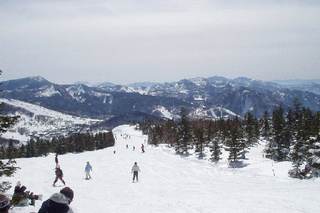
Shiga Kogen's all-mountain pass goes online November 1
The pass covering all 18 areas of Japan's largest linked ski network is ¥9,500 at the ticket counter or ¥8,500 bought online, and online sales for most of the 2026/27 all-mountain passes open on November 1.
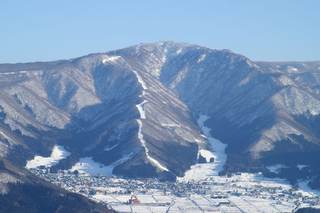
Nozawa Onsen's early-bird season pass closes September 30
An adult all-season pass is ¥93,000 if the application is postmarked by September 30, against ¥103,000 after. It runs from opening day to May 5 and covers night skiing, daily parking and discounts at partner resorts.
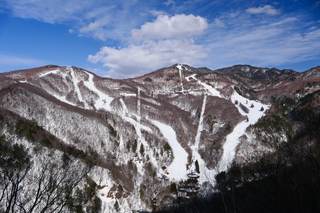
A lift has quietly disappeared from Shiga Kogen's Takamagahara area
The Takamagahara Mammoth No. 3 pair lift was removed in August. The terrain it served is still skiable; it just won't have its own dedicated lift this season.
Nagano 7 joint season pass adds an eighth resort for 2026/27
A multi-resort pass covering Nozawa Onsen and six others is expanding its lineup. Cupid of Romance, the Nagano ski area previously called Kijimadaira, is joining for the coming season.
Nothing yet specifically about Okushiga Kogen, Ryuoo Ski Park, Yakebitaiyama, X-JAM Takaifuji, Yamaboku Wild Snow Park or the snow monkeys: check back, or see each linked resort's own guide.

Skiing the slopes at Nozawa Onsen
A run through the Nozawa Onsen ski area, from the top of Yamabiko down to the village.

Planning a family snow trip to Shiga Kogen
Taking the kids to Shiga Kogen: what to expect skiing Japan's largest connected ski area, in Nagano, as a family.

Nozawa Onsen, Japan's coolest ski town
A look at Nozawa Onsen in Nagano: the old village, the public baths and the ski area above it.
No video yet covering Yamanouchi town itself, the snow monkeys, Okushiga Kogen, Ryuoo, X-JAM Takaifuji or Yamaboku: check back, or see each linked resort's own guide.